
The leather industry, which significantly increases greenhouse gas emissions, is undergoing a revolutionary change with innovations in material science. Stella McCartney and Veuve Clicquot's vegan leather produced from grape waste and Ece Gözen's lab-grown leather products are among the prime examples of deep technology reshaping the fashion world.
In the fashion world, where luxury often comes with an environmental cost, there are two initiatives that stand out with their claims on sustainability and innovation.
British designer Stella McCartney, known for her commitment to sustainability, collaborated with one of the biggest champagne producers, Veuve Clicquot. As a result of this partnership, the Italian biomaterials company VEGEA was commissioned to produce luxury vegan leather from grape waste. This product not only represents an innovative product for the fashion industry but also a sign of the industry's belief in sustainability. Composed of plant-based, renewable, and recycled waste, this material significantly reduces water usage during production compared to plastic and animal-based alternatives. This material, which is also compliant with international standards, is suitable for use in various industries and heralds a new era for sustainable luxury products.
A parallel development came from a Turkish initiative, GOZEN. The initiative's lab-grown leather product Lunaform was introduced by Balenciaga at Paris Fashion Week last month. Produced through the unique fermentation of microorganisms, this bio-material could be a game-changer in the leather industry. This eco-friendly, plastic-free material offers exceptional durability and flexibility and can be used in the fashion and automotive sectors. Gozen's innovation is evidence of deep technology's potential in creating sustainable materials without compromising quality or aesthetics.
These advances reflect a broader trend in the role of the deep technology sector in sustainable fashion. As consumers and brands increasingly prioritize eco-friendly products, these innovations offer viable alternatives to traditional leather and evolve in line with the growing demand for sustainable luxury products. This change can be interpreted not just as a niche trend but as an evolution responding to the need for environmental responsibility in the fashion industry.
The global leather goods market, projected to exceed $600 billion by 2030, seems ready for future disruptive innovations powered by sustainable technologies. The intersection of deep technology and fashion is more than just a niche trend. We are marching towards a future where the fabric is redefined to be produced in a more sustainable and ethical way, blending the art of luxury with sustainability.
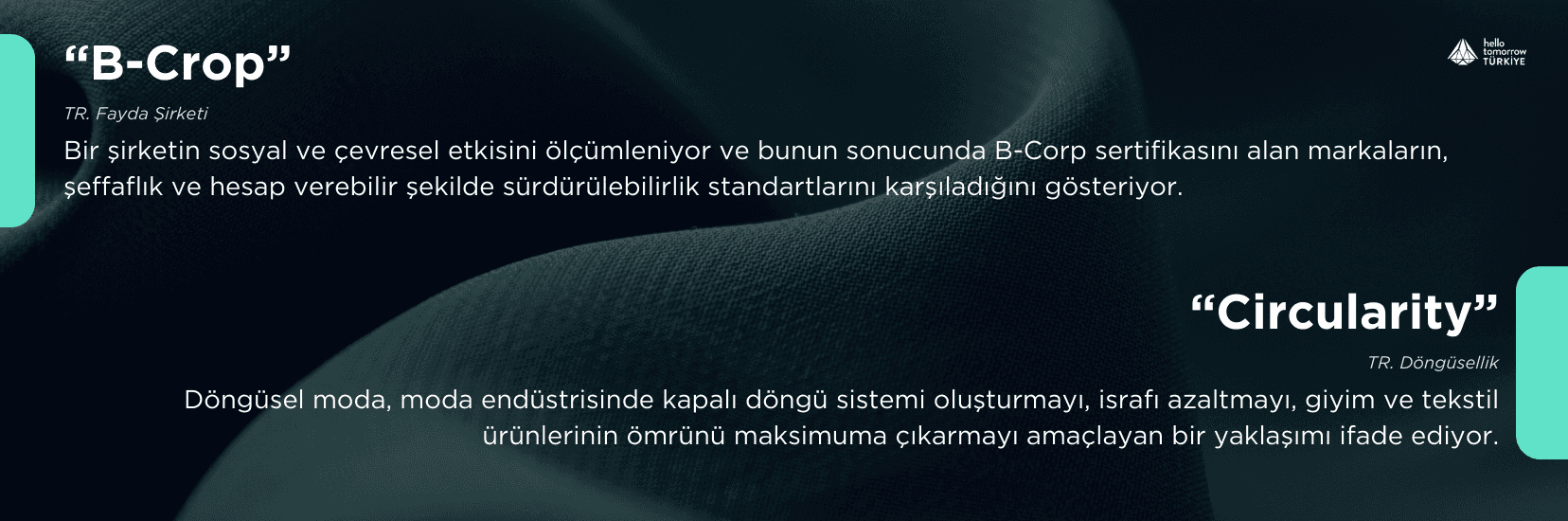
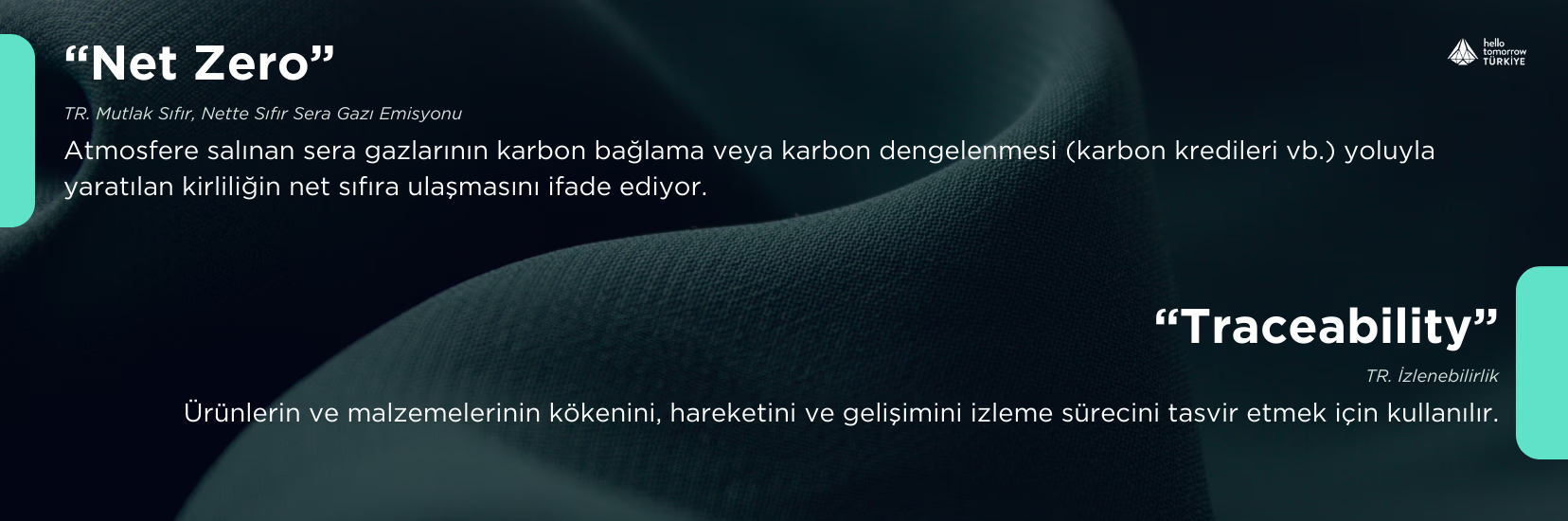
Green Glossary:

Resources you can explore:
UN Alliance for Sustainable Fashion: https://unfashionalliance.org/
How deep tech can drive sustainability and Profitability in Manufacturing: https://hbr.org/2023/09/how-deep-tech-can-drive-sustainability-and-profitability-in-manufacturing
To see how seemingly unrelated sectors initially converge with deep tech, attend the Hello Tomorrow Türkiye Summit in DasDas, Istanbul on 22 February 2024: https://hello-tomorrow.org.tr/hello-tomorrow-turkiye-summit